
Houston Lawn Mowing Services
Choose our lawn mowing services for reliable, professional care that keeps your yard looking its best all season long—enjoy more free time while we handle the hard work with precision and attention to detail.
Get a Free QuoteOur Houston Landscaping & Yard Care Services
When to Schedule Lawn Mowing in Houston, Texas – Seasonal Guide
In Houston, the best times to schedule lawn mowing are shaped by our unique Gulf Coast climate and the city’s diverse neighborhoods, from the shaded streets of West University Place to the open lawns near Memorial Park. The growing season typically stretches from late February, after the last frost, through November, with peak grass growth occurring in spring and early summer. Houston’s high humidity and frequent rainfall can accelerate turf growth, especially in areas with St. Augustine or Bermuda grass, while shaded yards in neighborhoods like The Heights may require less frequent mowing due to slower growth rates.
Local environmental factors play a significant role in determining your mowing schedule. For example, heavy clay soils common in River Oaks retain moisture, which can lead to rapid grass growth after rain, while drought-prone periods in late summer may require less frequent mowing to avoid stressing your lawn. It’s also important to consider municipal watering restrictions and the impact of tree canopy coverage, which can vary widely across Houston’s neighborhoods. For more information on local regulations and best practices, visit the Sudbury municipal site.
Local Factors to Consider for Lawn Mowing in Houston
- Tree density and shade coverage
- Soil type (clay, sandy, or loam)
- Seasonal precipitation and drought risk
- Proximity to bayous or flood-prone areas
- Municipal watering and mowing restrictions
- Terrain and yard slope
- Grass species common to your neighborhood
Benefits of Lawn Mowing in Houston
Consistent Curb Appeal
Healthier Grass Growth
Weed and Pest Control
Time-Saving Service
Professional Equipment
Customized Lawn Care Plans
Houston Lawn Mowing Types

Standard Lawn Mowing
-
Mulching Mower Service
-
Bagging Grass Clippings
-
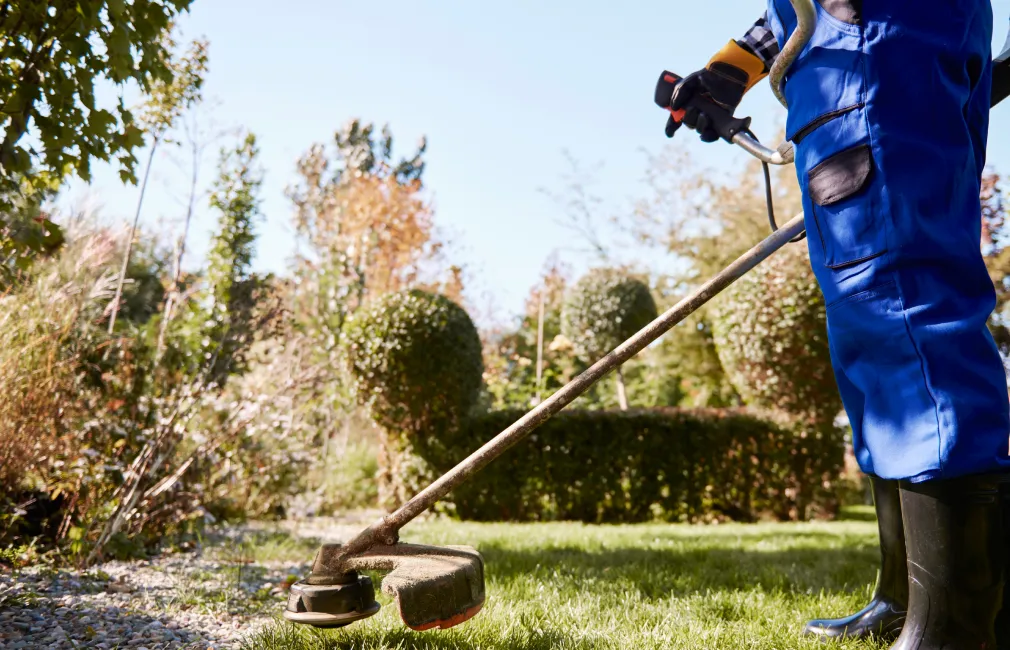
Edging and Trimming
-
Commercial Lawn Mowing
-
Zero-Turn Mowing
-
Seasonal Lawn Maintenance
Our Lawn Mowing Process
Site Evaluation
Lawn Preparation
Mowing Execution
Edging and Trimming
Cleanup
Why Choose Houston Landscape Services
-
Houston Homeowners Trust Us
-
Expert Lawn Maintenance
-
Competitive Pricing
-
Professional Team
-
Satisfaction Guarantee
-
Personalized Service
-
Reliable Scheduling
Houston’s Blackland Prairie Soils: Mowing Practices for Heavy Clay and Drainage
Houston’s predominant soil series, including the Houston Black clay and related Vertisols, present unique challenges for lawn mowing due to their high clay content, poor drainage, and tendency toward compaction. These soils typically have a pH range of 7.0-8.0 and can become waterlogged after heavy rainfall, especially in low-lying neighborhoods. To maintain healthy turf, core aeration to a depth of 2-3 inches is recommended every 2-3 years, and mowing should be avoided when soils are saturated to prevent rutting. For optimal results, mow cool-season grasses such as Kentucky bluegrass (Poa pratensis) and perennial ryegrass (Lolium perenne) at 2.5-3.5 inches, and warm-season species like St. Augustinegrass (Stenotaphrum secundatum) at 3-4 inches. Soil testing through Texas A&M AgriLife Extension is advised to determine amendment needs. Research local soil characteristics using the USDA Web Soil Survey.
Houston Public Works Department
611 Walker Street, Houston, TX 77002
Phone: (832) 395-2500
Official Website: Houston Public Works Department
Equipment Operation Hours and Noise Ordinance Compliance for Lawn Mowing in Houston
Lawn mowing in Houston is regulated under municipal noise ordinances to minimize disturbances in residential areas. Equipment operation is permitted during the following hours:
- Monday-Friday: 7:00 AM - 7:00 PM
- Saturday: 8:00 AM - 6:00 PM
- Sunday and holidays: Prohibited All commercial and residential operators must ensure that mower noise does not exceed 85 decibels at the property line. Equipment must be maintained with functional mufflers, and blade sharpening is recommended every 20-25 hours of use. When mowing near public sidewalks or streets, maintain a 15-foot clearance from pedestrians and vehicles. Operators are required to wear ANSI Z87.1 safety glasses and hearing protection for noise above 85 dB. For questions regarding compliance, consult the city’s code enforcement division.
Houston Code Enforcement
611 Walker Street, Houston, TX 77002
Phone: (832) 394-0600
Official Website: Houston Public Works Department
Seasonal Timing and Weather Considerations for Houston Lawn Mowing
Houston’s humid subtropical climate (USDA Hardiness Zone 9a) features a long growing season, with optimal mowing periods from March through November. Spring mowing should begin when soil temperatures reach 55°F, typically in mid-March, and continue weekly or biweekly depending on rainfall and growth rates. Avoid mowing during peak summer heat (June-August) when turf is stressed, and resume regular mowing in September as temperatures moderate. The National Weather Service Houston/Galveston Office provides up-to-date forecasts to help schedule mowing around rain events and extreme heat. Key timing guidelines include:
- Spring mowing: March 15 - May 31
- Summer mowing: Reduce frequency June-August
- Fall mowing: September 1 - November 15
- Avoid mowing when soil is saturated or during drought stress
Stormwater Compliance and Clipping Disposal Under Houston’s MS4 Permit
Proper management of grass clippings and yard waste is essential to comply with Houston’s MS4 (Municipal Separate Storm Sewer System) permit under the Clean Water Act and Texas Water Code. It is prohibited to blow or dispose of clippings into storm drains, streets, or ditches, as this can contribute to nutrient pollution in Buffalo Bayou and other local waterways. Residents must use biodegradable bags or 32-gallon containers for yard waste, with weekly curbside collection every Thursday from April through November. Prohibited disposal methods include plastic bags and dumping in drainage channels. For additional guidance, refer to the city’s yard waste program and state stormwater regulations.
Houston Environmental Board
901 Bagby Street, Houston, TX 77002
Phone: (832) 393-3000
Official Website: Houston Environmental Board
Texas Commission on Environmental Quality
12100 Park 35 Circle, Austin, TX 78753
Phone: (512) 239-1000
Official Website: Texas Commission on Environmental Quality
What Neighborhoods Do We Serve Throughout Houston, TX?
- River Oaks: Characterized by mature tree canopies and expansive lots, this area often faces heavy leaf accumulation and shade-related turf challenges, requiring careful mowing height adjustments and frequent debris management.
- The Heights: Historic bungalows and narrow lots with compacted urban soils demand specialized equipment for maneuverability and attention to drainage during wet periods.
- West University Place: Dense residential development with strict HOA guidelines necessitates adherence to noise ordinances and precise mowing schedules to maintain uniform curb appeal.
- Meyerland: Located in a floodplain, this neighborhood experiences periodic waterlogging and requires mowing practices that minimize soil compaction and protect stormwater infrastructure.
- Midtown: High-density, mixed-use properties with limited green space and heavy pedestrian traffic require careful scheduling and safety protocols during mowing operations.
- Kingwood: Proximity to Lake Houston and forested areas introduces unique considerations for buffer zones, wildlife protection, and compliance with local conservation regulations.
- Memorial: Large lots with sloped terrain and mature landscaping present challenges for equipment access and require attention to erosion control and runoff management.